
Chiayi District Prosecutors Office Speaks at Forestry and Nature Conservation Agency’s Chiayi Branch to Deepen Integrity in Agricultural Green Energy and Whistleblower Protection Mechanisms



- Publication Date:
- Last updated:2026-07-29
- View count:3
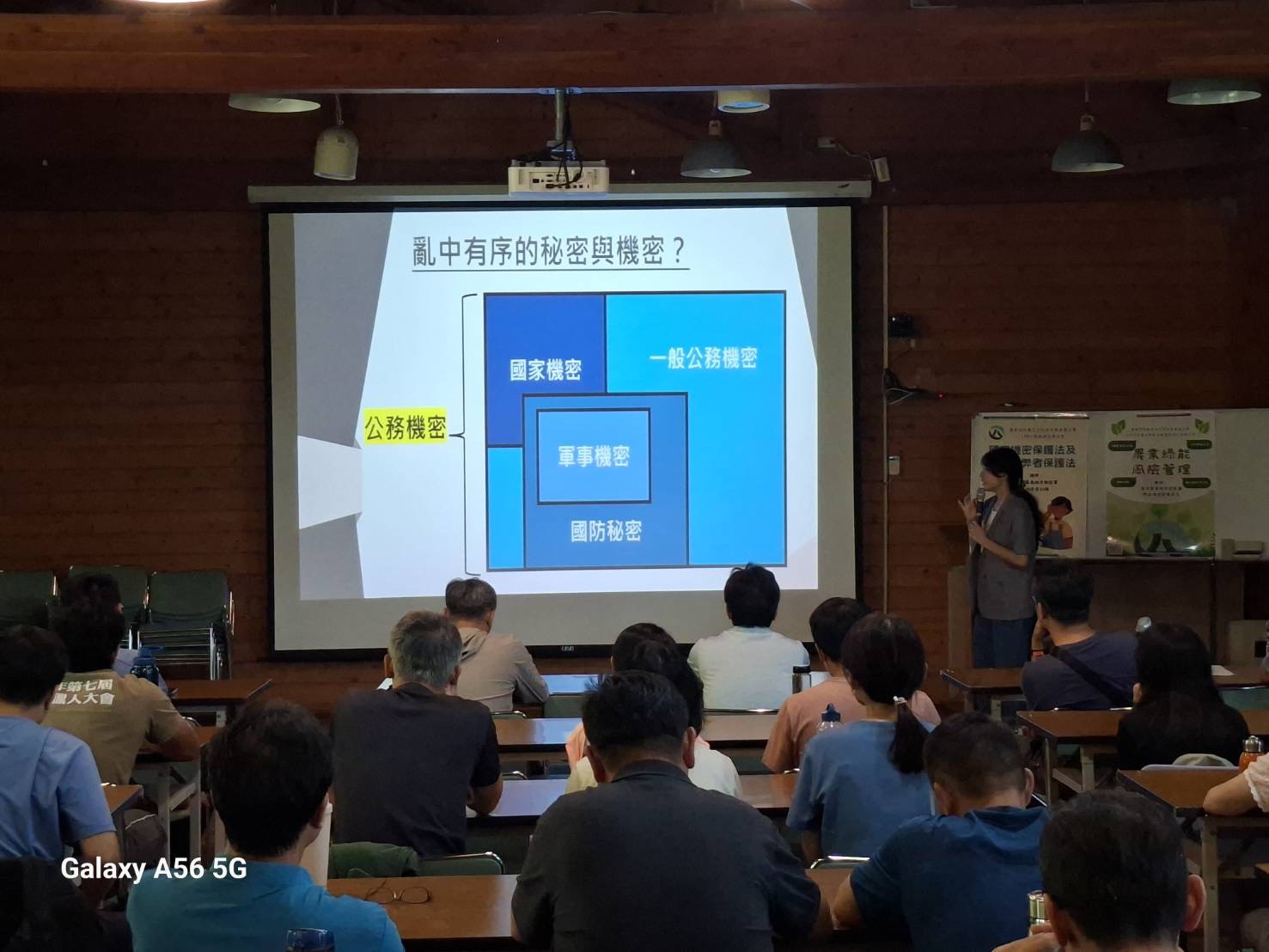
Green energy is a crucial national policy direction vital to energy security and sustainable development. To prevent crimes that undermine the normal development of the green energy sector from affecting major national construction and public welfare, the Chiayi District Prosecutors Office has actively worked to deepen integrity governance, ensure the substantive operation of internal control mechanisms in the public sector, and reinforce administrative transparency and ethical values. Yesterday (July 28), Chief Prosecutor Chen Ding-wen and Prosecutor Li Tsai-chi personally visited the Chiayi Branch of the Forestry and Nature Conservation Agency, Ministry of Agriculture, to deliver specialized anti-corruption lectures titled "2026 Agricultural Green Energy Risk Management" and "2026 Classified National Security Information Protection Act & Public Interest Whistleblower Protection Act."
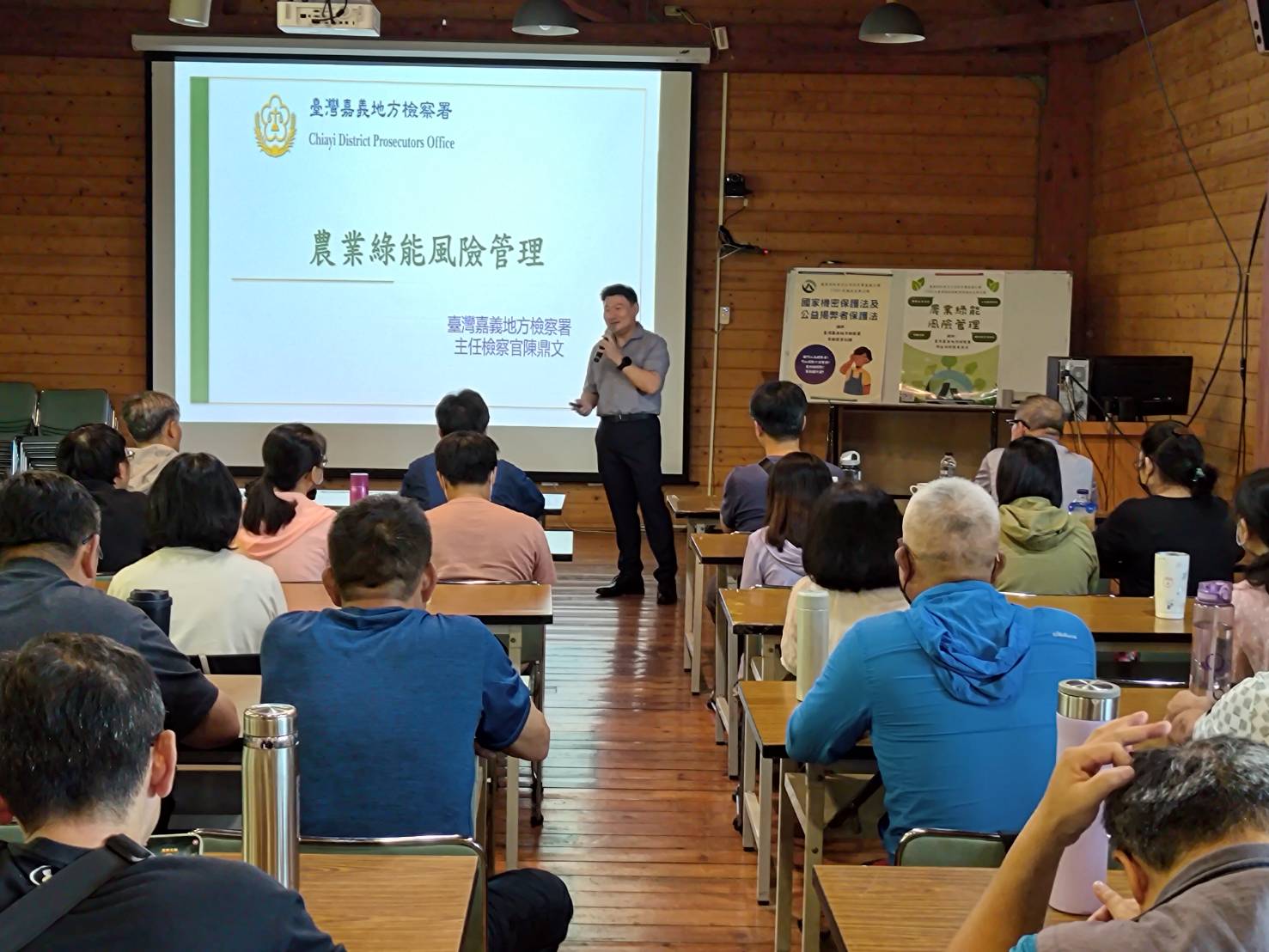
During his lecture on "2026 Agricultural Green Energy Risk Management," Chief Prosecutor Chen Ding-wen provided an in-depth analysis of risk management within the green energy industry. He highlighted three main stages in the application process for solar photovoltaic systems—administrative approval, land use conversion, and construction inspection/acceptance—as being particularly vulnerable to corruption and illicit benefit transfers. Speaking from a judicial practice perspective, Chief Prosecutor Chen clearly delineated the boundary between "lawful convenience for the public" and "illegal profit-making," emphasizing that public servants must strictly abide by the law. He also thoroughly analyzed common criminal patterns involving civil servants, elected representatives, and local influential figures—such as intentionally creating obstacles to solicit bribes or tailoring tender specifications. Citing actual photovoltaic bribery cases from the Yunlin-Chiayi region, he cautioned all attendees to uphold the bottom line of integrity and jointly safeguard a fair competitive environment for the industry.
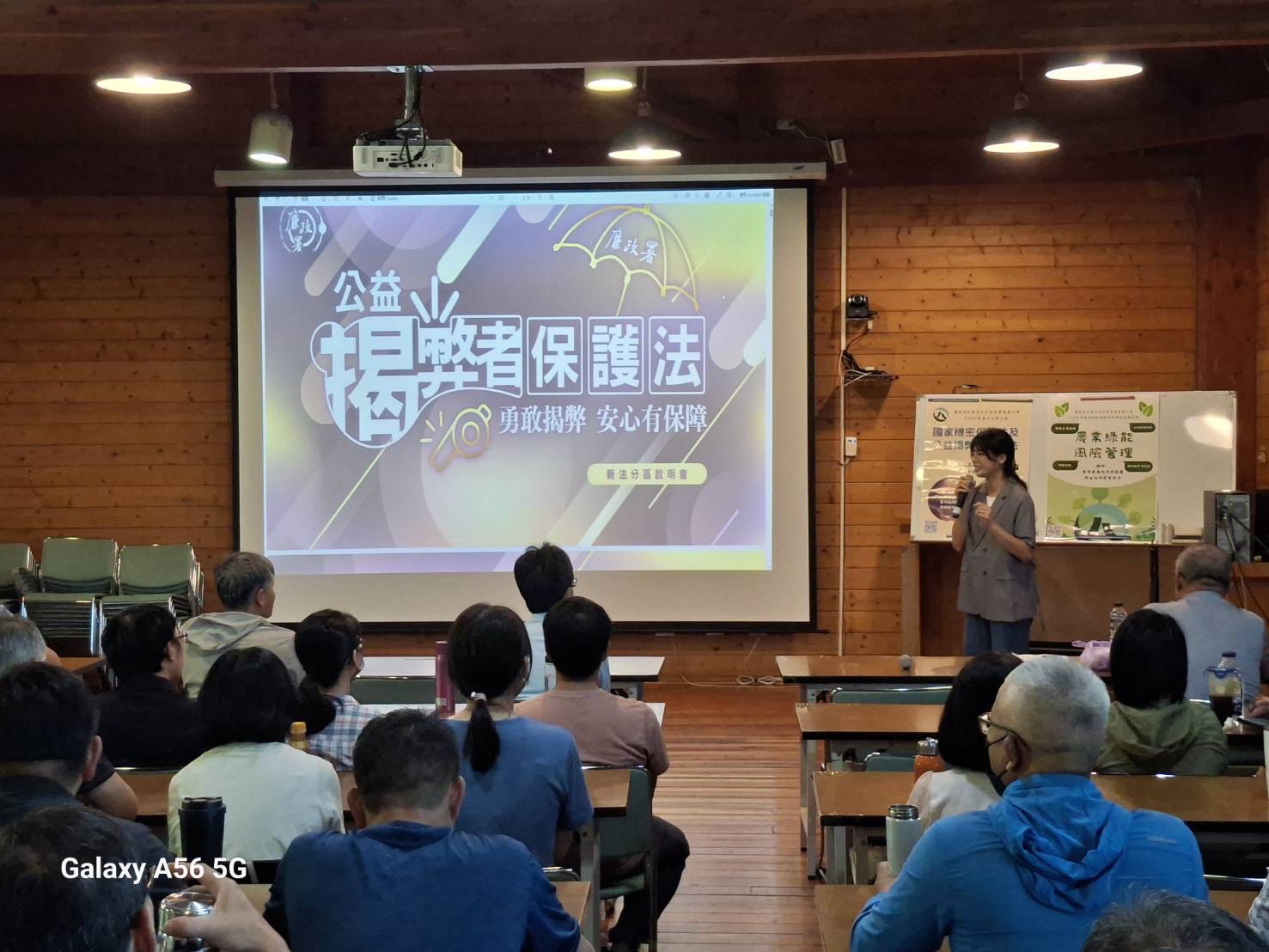
Addressing the critical role of internal reports in maintaining organizational integrity, Prosecutor Li Tsai-chi lectured on the spirit of the newly enacted Public Interest Whistleblower Protection Act. Prosecutor Li pointed out that the scope of this legislation comprehensively covers the quasi-public sector, including government agencies, state-owned enterprises, and government-controlled institutions. To relieve whistleblowers of any concerns, the new law establishes four major protection mechanisms:
-
Job Security: Prohibits demotions, pay cuts, and other adverse employment actions.
-
Identity Confidentiality: Enforces encrypted investigations and restricted viewing permissions.
-
Personal Safety: Applies relevant provisions of the Witness Protection Act.
-
Liability Exemption: Provides protection against breach-of-secrecy liability and mitigation of criminal liability.
Together, these mechanisms construct a comprehensive safety net against workplace retaliation.
Through these two practical, accessible, and insightful lectures, the Chiayi District Prosecutors Office aims to help public servants accurately grasp the spirit of the new legislation, laying a solid foundation for the government to deepen clean governance. Furthermore, as election season approaches, the Office will continue to strike aggressively against illegal activities—such as money, violence, and misinformation interfering in elections—while actively promoting anti-election fraud campaigns to maintain a fair, impartial, and clean electoral environment, steadfastly upholding the core values of democracy and the rule of law. The Office also urges the general public to courageously report election bribery and work together to foster a clean political climate.
Pictures
S__78594062_0
S__78594060_0
S__78594059