
Chiayi District Prosecutors Office Conducts Tour Briefings in Puzi and Zhongpu Chief Prosecutor Tsai Leads Team for Pre-election Deployment Collaborating with Five Key Agencies—Police, Investigation, Government Ethics, Military Police, and Immigration—to Strictly Prevent Emerging Cognitive Warfare



- Publication Date:
- Last updated:2026-07-01
- View count:82
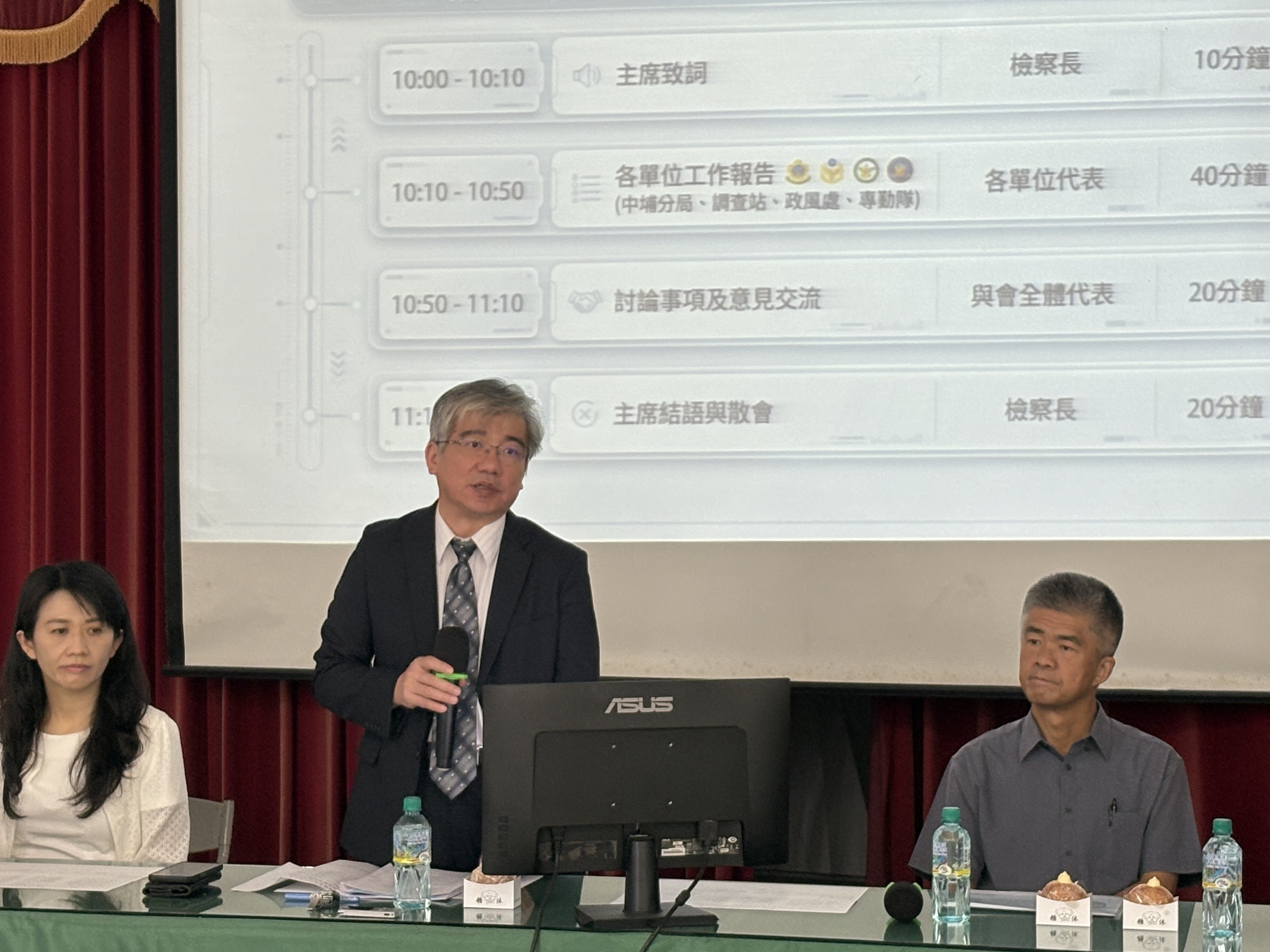
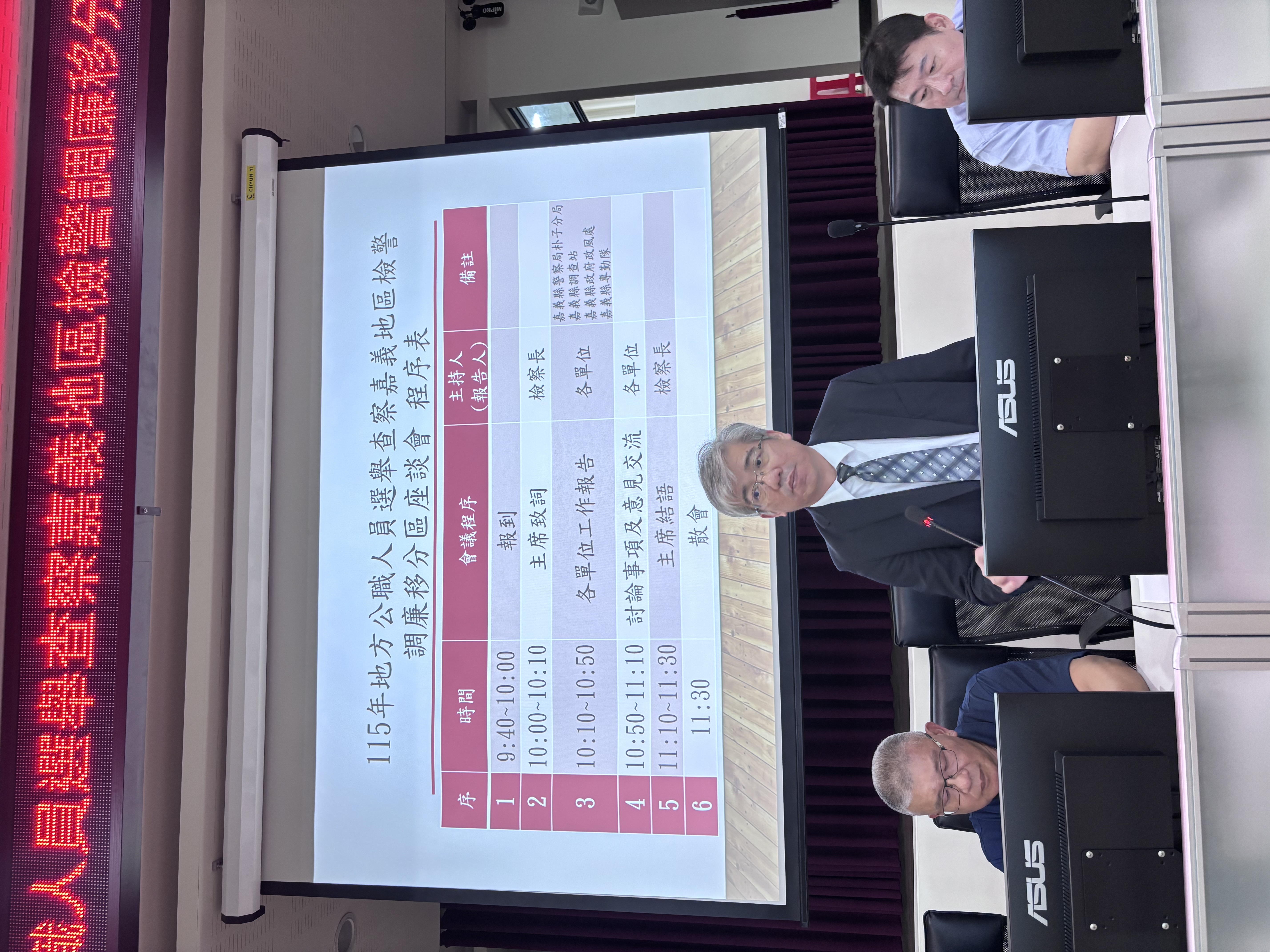
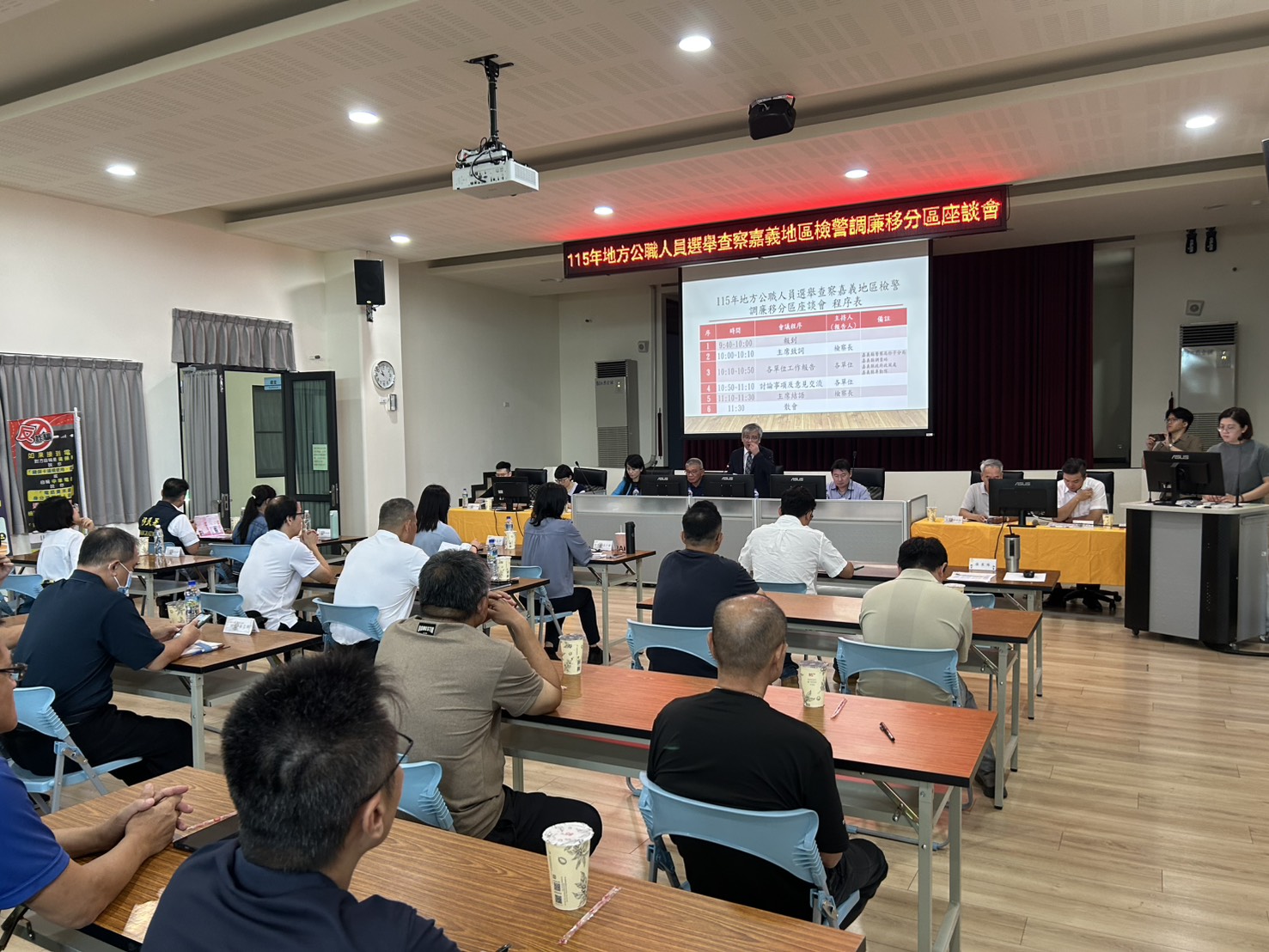
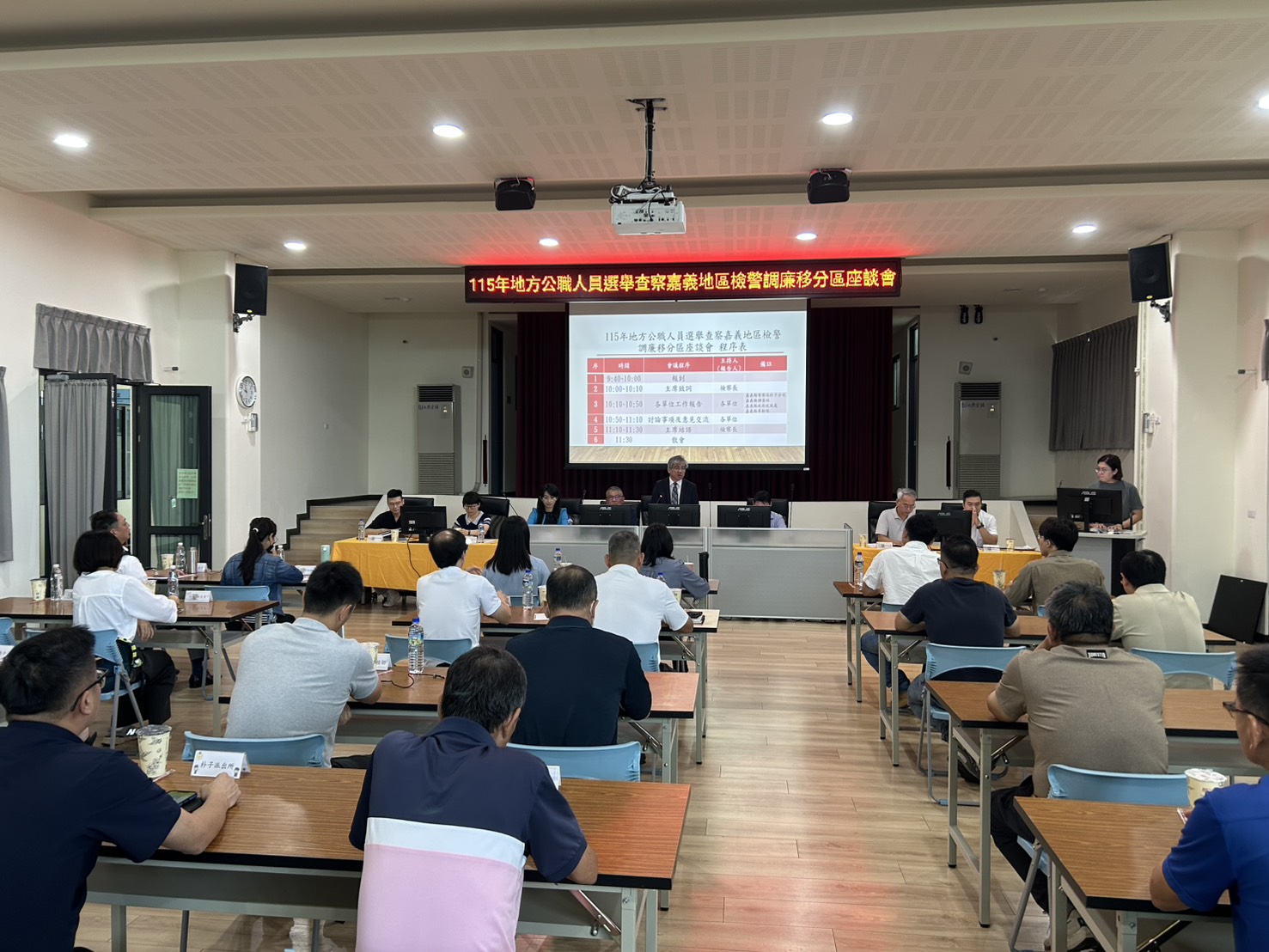
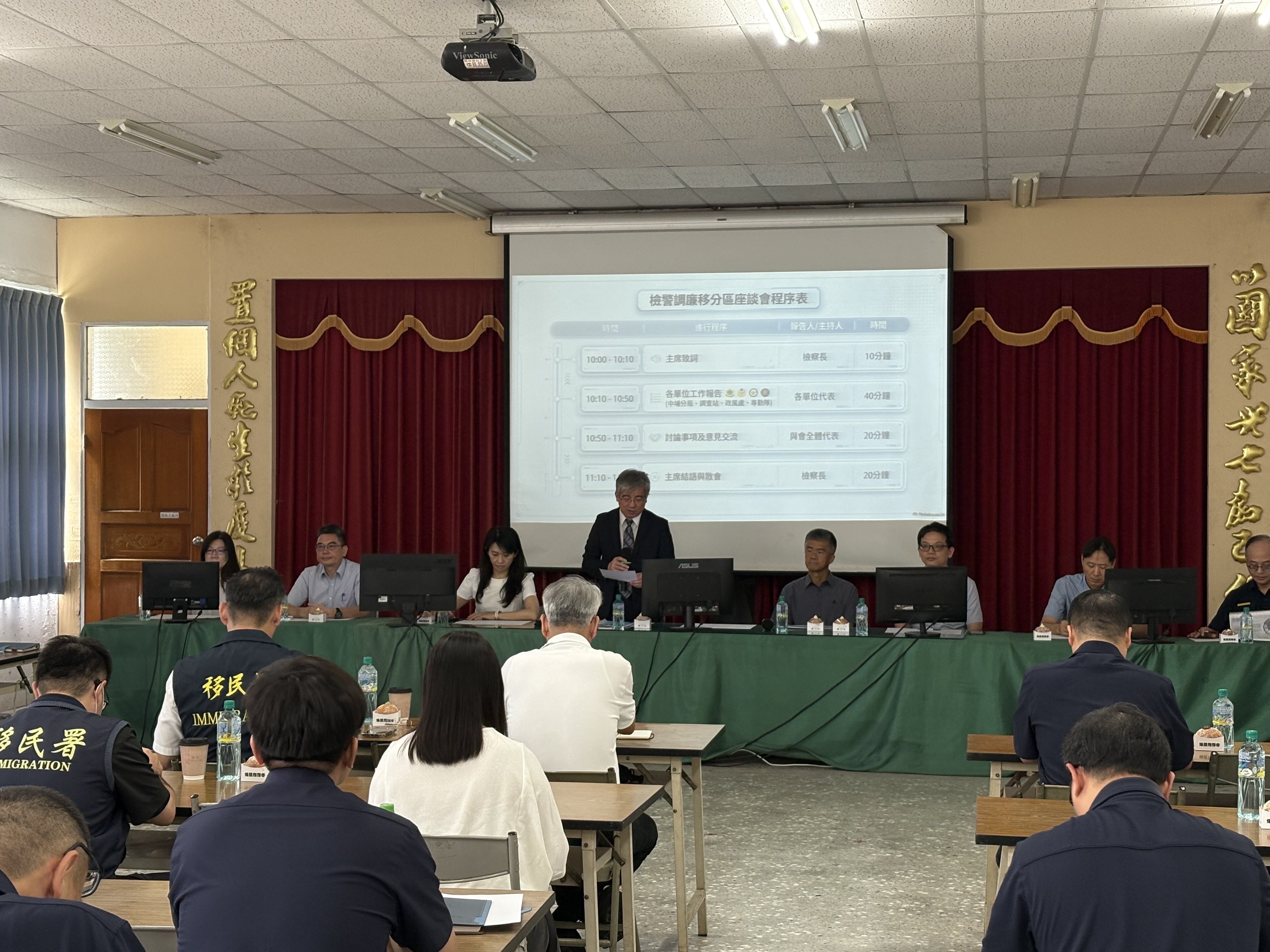
To prepare for the late-year campaign of the "2026 Local Public Officials 9-in-1 Elections," the Taiwan Chiayi District Prosecutors Office (hereinafter "the Office") has taken proactive steps to deploy resources ahead of schedule. Following a series of recent coordination meetings at the Chiayi City Police Department First Precinct, as well as the Budai, Zhuqi, and Minxiong Precincts of the Chiayi County Police Bureau to build consensus, Chief Prosecutor Tsai Zong-xi led a team to follow up on the progress of previously deployed intelligence. On June 30 and July 1, 2026, Chief Prosecutor Tsai, accompanied by Head Prosecutors Chen Jing-hui, Chen Ding-wen, and Jiang Jin-xing, as well as supervising Prosecutors Jian Jing-yu, Qiu Yi-lin, Lin Jun-liang, and Ke Wen-ling, visited the Puzi and Zhongpu Precincts of the Chiayi County Police Bureau to preside over regional election-investigation briefings. The tour continued to rally the five major investigative systems—police, investigation, government ethics, military police, and the National Immigration Agency—to jointly deliberate on precision-strike strategies.
In addition to the prosecutors' office, this regional briefing brought together various agency heads and representatives, including Hsu Yi-hsiang and Chen Yu-ren, Deputy Directors General of the Chiayi County Police Bureau; Zhuang Yu-ying, Chief of the Puzi Precinct; Wu Bo-yuan, Chief of the Zhongpu Precinct; Wu Zhen-yi, Deputy Director of the Chiayi County Investigation Station under the Investigation Bureau of the Ministry of Justice; Luo Jin-ding, Captain of the Chiayi County Specialized Operation Brigade of the National Immigration Agency; as well as representatives from the Chiayi County Government Ethics Department and the township ethics offices within each precinct’s jurisdiction. During the meeting, participants reviewed deployment reports from each agency, analyzed the geographical characteristics and historical case types of the jurisdictions, and conducted legal advocacy alongside a review of key investigation focuses to strengthen intelligence collection and precision strikes against illegal activities.
I. Puzi Precinct Jurisdiction (4th Electoral District): A Benchmark Coastal Region
Due to historically fierce electoral competition, this region is a primary focus for the Office’s legal advocacy. In light of the upcoming transition where several local administrative heads will reach their term limits and representative seats will shift between incumbents and newcomers, all agencies must implement pre-election prevention. This includes intensifying anti-bribery campaigns in communities, neighborhoods, and local temples to reiterate the concept of "clean candidacy." Special attention must be paid to new types of illegal mobilization triggered by shifting seats, and strict measures must be taken to prevent money and illicit interests from interfering in the election, thereby ensuring its integrity.
II. Zhongpu Precinct Jurisdiction (6th Electoral District): Mountainous Deployment and Fraud Prevention
This region is characterized by a mountainous environment with a vast territory and scattered polling stations. The Office pointed out that regarding illicit funds related to past local construction projects or public corruption cases in the jurisdiction, the investigation team must strictly track the cash flow to prevent illegal gains from being transformed into tools for election interference. Furthermore, as some electoral districts present diverse scenarios—ranging from intense competition to uncontested races—ground-level deployment must penetrate deep into mountainous villages to reinforce the legal baseline of "no vote-buying, no vote-selling" among local residents.
To counter diverse forms of vote-buying, the Office presented three concrete execution plans:
-
Strictly Investigate Traditional Cash Vote-Buying: Prevent political brokers (campaign pillars) from organizing multi-tiered, joint vote-buying schemes.
-
Prevent Disguised Bribery: Closely monitor suspicious activities that resemble vote-buying, such as holiday gift-giving, organizing free tours or banquets, distributing daily necessities, or paying "walking money" (stipends for campaign rally attendees).
-
Completely Track "Ghost Populations": Launch comprehensive audits on abnormal household registrations and rapid population transfers around newly developed areas.
Chief Prosecutor Tsai emphasized that the Office’s "Election Interference Investigation Task Force" is fully operational, and specifically highlighted four counter-strategies:
-
1. Strictly Crack Down on Vote-Buying Violence and Restrain Gangs: Police agencies must maintain a tight grip on violent gang members within their jurisdictions, proactively issuing "warnings and restraints" to suspect organizations to prevent gangs from disrupting the election. If concrete illegal evidence is found, the principle of "swift investigation and strict prosecution" will be upheld to thoroughly eradicate election violence.
-
2. Sever Illegal Gambling Rings and Protect Informants: Conduct a sweep against election gambling rings that capitalize on fierce grassroots races or hot-button topics, and implement the highest standard of confidentiality regarding the identity of informants.
-
3. Strictly Prevent AI Deepfakes and Emerging Cognitive Warfare: Swiftly investigate and prosecute false audio and video materials used for defamation through generative AI. Chief Prosecutor Tsai warned that hostile foreign forces have recently been found utilizing AI technology to rapidly duplicate and create "fake fan pages" for large-scale spamming. These pages target livelihood topics like food, health, and lifestyle to attract young demographics and cultivate a follower base, intending to manipulate election outcomes through cognitive warfare. Investigative agencies must actively trace the sources and enhance public awareness and prevention.
-
4. Block Foreign Interference in Elections: Closely monitor new types of benefit transfers utilizing electronic payments or virtual currencies to prevent underground remittances and abnormal group tours to Mainland China funded to support specific candidates.
Chief Prosecutor Tsai concluded by calling on all candidates to present political platforms for voters to choose from, stressing that the Office will strictly investigate any cases of election interference without exception. Citizens are welcome to safeguard the foundations of democracy together. If any suspicious clues are found, please call the toll-free reporting hotline: 0800-024099 (Press 4).
The Office guarantees absolute confidentiality regarding identities. The maximum reward for reporting foreign interference is NT$20 million, up to NT$10 million for vote-buying, and up to NT$5 million for election gambling rings. Let us work together to build a clean and democratic homeland.
Pictures
B991BF1D-709F-4400-8AE1-99E20B014263_0
9F005F9B-A480-4E19-B695-88972C522059_0
S__32866321_0_0
S__32866317(1)_0
D0BE84DF-6886-4FFF-89FE-5F5654C91DA5_0