
Chief Prosecutor of Chiayi Leads Delegation to Zhuqi Symposium, Highlighting Frontline Investigative Priorities; Strict Defenses Against Factional and Illicit Fund Interference as Strong Anti-Bribery Resolve is Declared.



- Publication Date:
- Last updated:2026-06-16
- View count:66
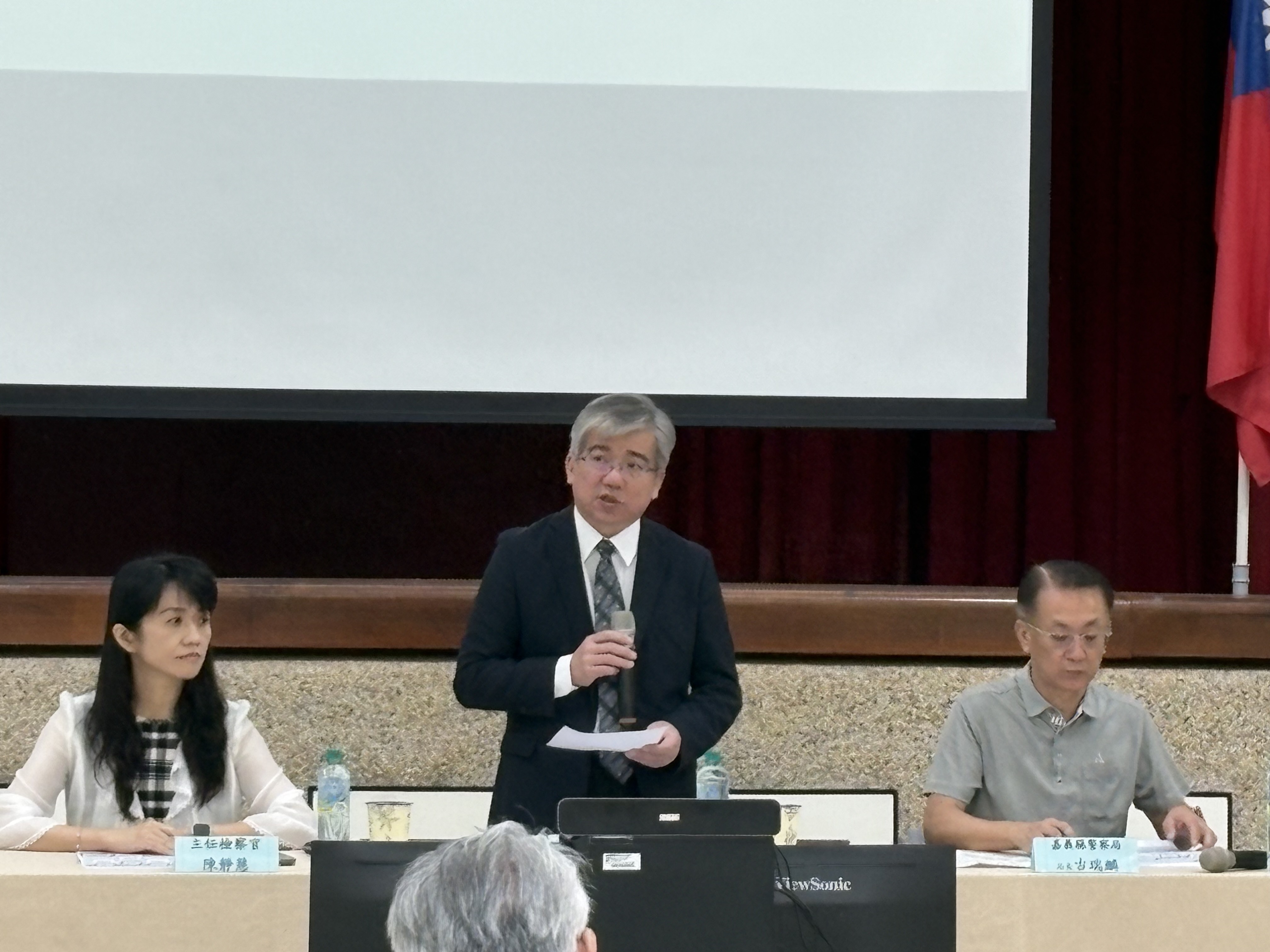
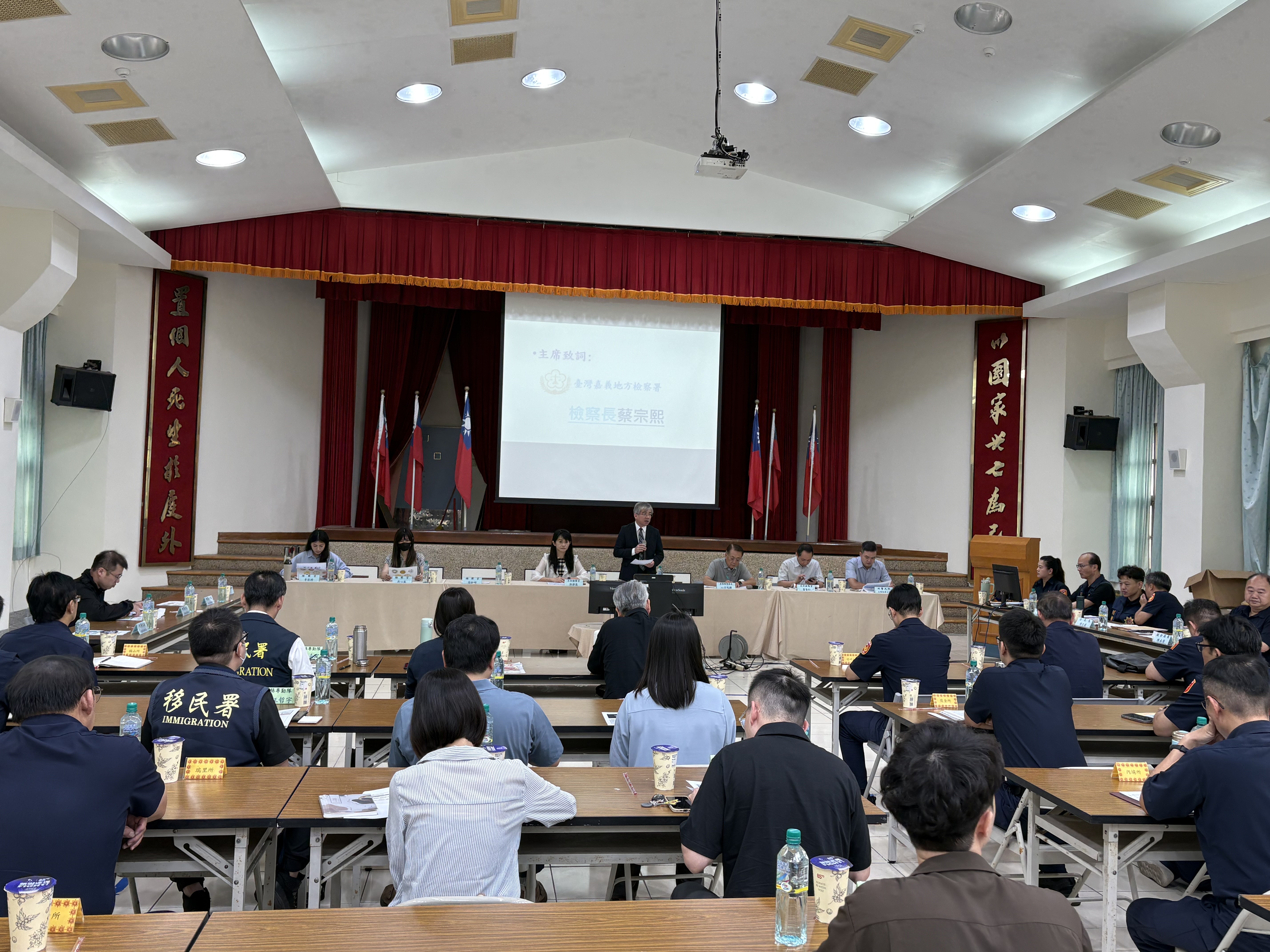
In response to the year-end "2026 Local Public Officials 9-in-1 Elections," the grassroots election campaign in the mountainous regions of Chiayi County has reached a boiling point. Following its previous investigative training courses, the Taiwan Chiayi District Prosecutors Office (CYDPO) took further action on June 16, 2026. Chief Prosecutor Tsai Tzung-Shi personally led a delegation—including Head Prosecutors Chen Jing-hui and Jiang Zhi-ren, alongside Prosecutors Wu Xin-lan and Li Cai-qi—to the Zhuqi Division of the Chiayi County Police Bureau. There, they convened a localized symposium on investigating election interference, declaring their unwavering resolve for strict law enforcement and a robust crackdown on election bribery.
In addition to the prosecution authorities, the symposium was attended by heads and representatives from various agencies, including:
-
Ku Jui-lin, Director-General of the Chiayi County Police Bureau
-
Chou Chih-yuan, Commander of the Zhuqi Division
-
Wu Jun-yi, Deputy Director of the Chiayi County Station of the Investigation Bureau (Ministry of Justice)
-
Luo Jin-ding, Captain of the Chiayi County Specialized Operation Brigade (National Immigration Agency)
-
Chiayi County Government Ethics Department and the Ethics Offices of the local Township Offices
During the meeting, the attending agencies and units analyzed the latest election dynamics within their respective jurisdictions. Intelligence indicates that following the finalization of political parties' primaries and nominations, the grassroots power structure and succession dynamics in the Chiayi mountainous region—which primarily spans the 3rd and 6th electoral districts of the Chiayi County Council, as well as the Indigenous electoral districts—are undergoing intense reorganization and realignment:
-
Zhuqi Township Area: An incumbent representative emerged victorious in a major political party's mayoral primary, leading to a restructuring of power within the representative council and a subsequent tug-of-war for political integration.
-
Meishan Township Area: A political party has nominated a challenger against the incumbent independent township mayor seeking re-election, setting the stage for a head-to-head battle between administrative leverage and grassroots support from farmers' associations and village chiefs.
-
Alishan Township and Indigenous Councilor Districts: The election landscape has reverted to traditional tribal alliances, involving contests between ancestral families, chieftains, and influential local clans.
-
County Councilor Districts: Due to incumbent councilors shifting campaigns to run for township mayor, seats have opened up. Combined with a reduction of one councilor seat in the 3rd electoral district, this has triggered a fierce scramble and realignment among emerging political newcomers and different political camps in the mountainous areas.
Head Prosecutors Chen Jing-hui and Jiang Zhi-ren outlined key operational priorities for the aforementioned "bribery hotspots." They urged all agencies to closely monitor informants ("mines") to prevent illegal activities arising from the symbiotic relationship where large-scale and grassroots campaigns are "bundled together for joint vote-lobbying." In the event of fake news or deepfake audio/video cases, evidence must be gathered swiftly for immediate investigation. Furthermore, election gambling rings must be eradicated, and the highest standards of confidentiality regarding the identities of informants must be strictly enforced.
Chief Prosecutor Tsai specifically instructed that given the fierce election rivalry in the mountains—and noting that village chiefs and representatives in tea-producing and tourism regions like Meishan and Alishan often serve as the leadership core of local tea industries, B&Bs, or prominent local temples—equal emphasis must be placed on public education and law enforcement. The creation of "ghost populations" through fraudulent household registrations is strictly forbidden. Similarly, the practice of buying votes under the guise of tea production/marketing inspections, fellowships, banquets, or tour groups is strictly prohibited.
In areas marked by local factional rivalries, authorities must strictly guard against the influx of illicit funds or the exchange of interests under the pretext of traditional festivals and temple activities. The CYDPO's "Election Interference Investigation Task Force" has been fully activated. It will fully counter four core challenges: "resolutely investigating election bribery and violence, severing illegal gambling rings, blocking AI deepfake disinformation, and intercepting foreign interference."
The meeting also highlighted the regulations regarding rewards for reporting election interference. Citizens are urged to call the toll-free reporting hotline at 0800-024099 (press 4) if they discover any suspicious leads. The CYDPO will maintain the highest standard of confidentiality and award substantial bounties: up to NT$20 million for reporting foreign interference, up to NT$10 million for election bribery, and up to NT$5 million for election gambling rings. Together, we can safeguard a fair and competitive electoral order.
Pictures
A80C528E-F7CD-4460-AC68-2DF747A7046C_0
15CC1DFB-A6A9-46C5-ADDF-798D9BCE621C_0