
Chiayi Chief Prosecutor Visits Taipower to Analyze Common Corruption Types; Cites Practical Judgments to Urge Staff to Strictly Abide by Legal Boundaries



- Publication Date:
- Last updated:2026-07-09
- View count:69
Chiayi Chief Prosecutor Visits Taipower to Analyze Common Corruption Types; Cites Practical Judgments to Urge Staff to Strictly Abide by Legal Boundaries
To deeply ingrain the concepts of integrity and rule of law among state-owned enterprise (SOE) personnel and to implement honest business operations, Chief Prosecutor Tsai Tzung-Shi of the Chiayi District Prosecutors Office was invited today (July 9) to the Chiayi District Office of the Taiwan Power Company (Taipower). He delivered a keynote lecture titled "Analysis of Common Corruption and Criminal Patterns in State-Owned Enterprises." Through accessible legal analysis and a wealth of practical cases, Chief Prosecutor Tsai reminded SOE staff to strictly adhere to legal boundaries when performing their duties to avoid inadvertently breaking the law.
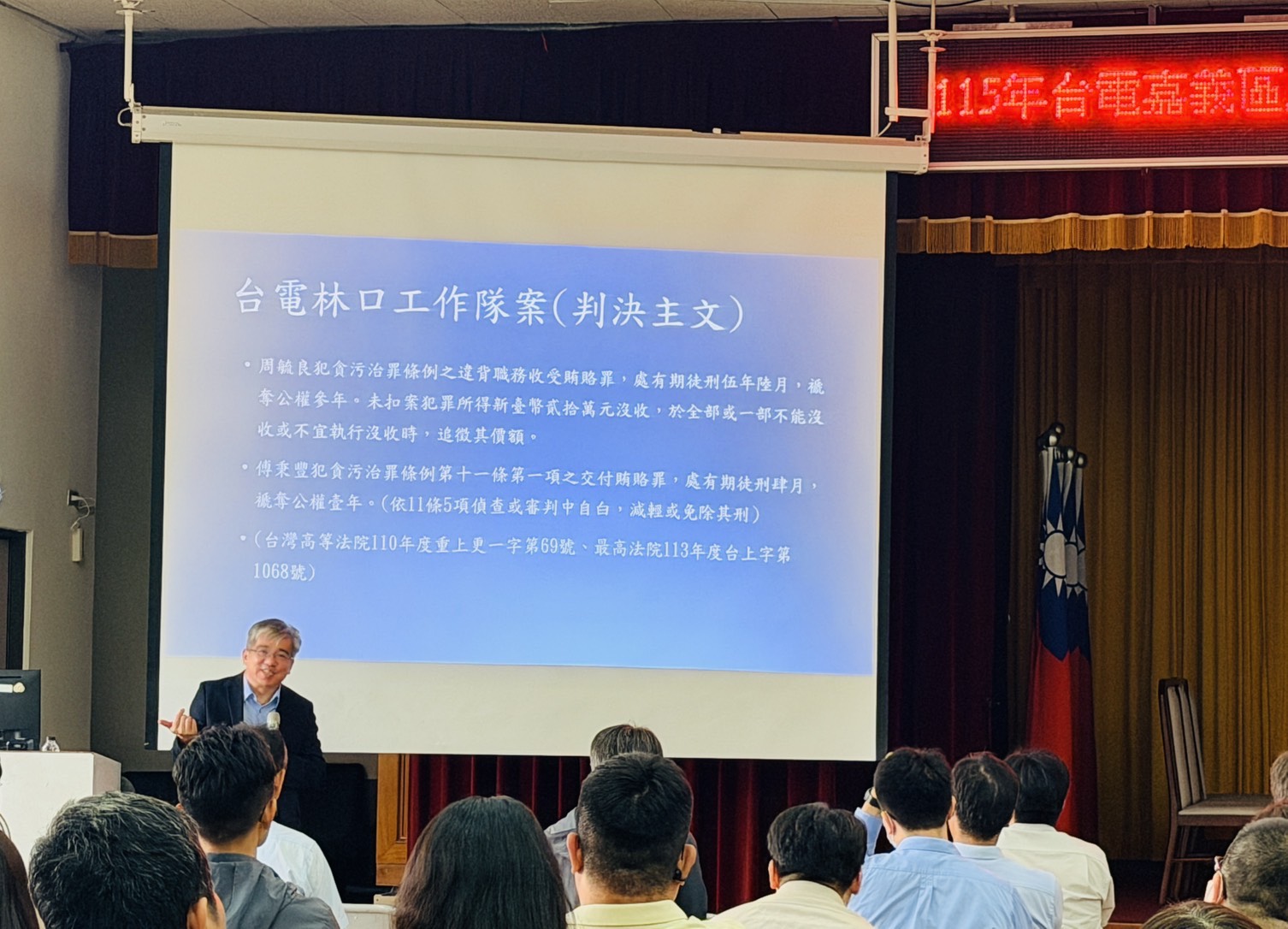
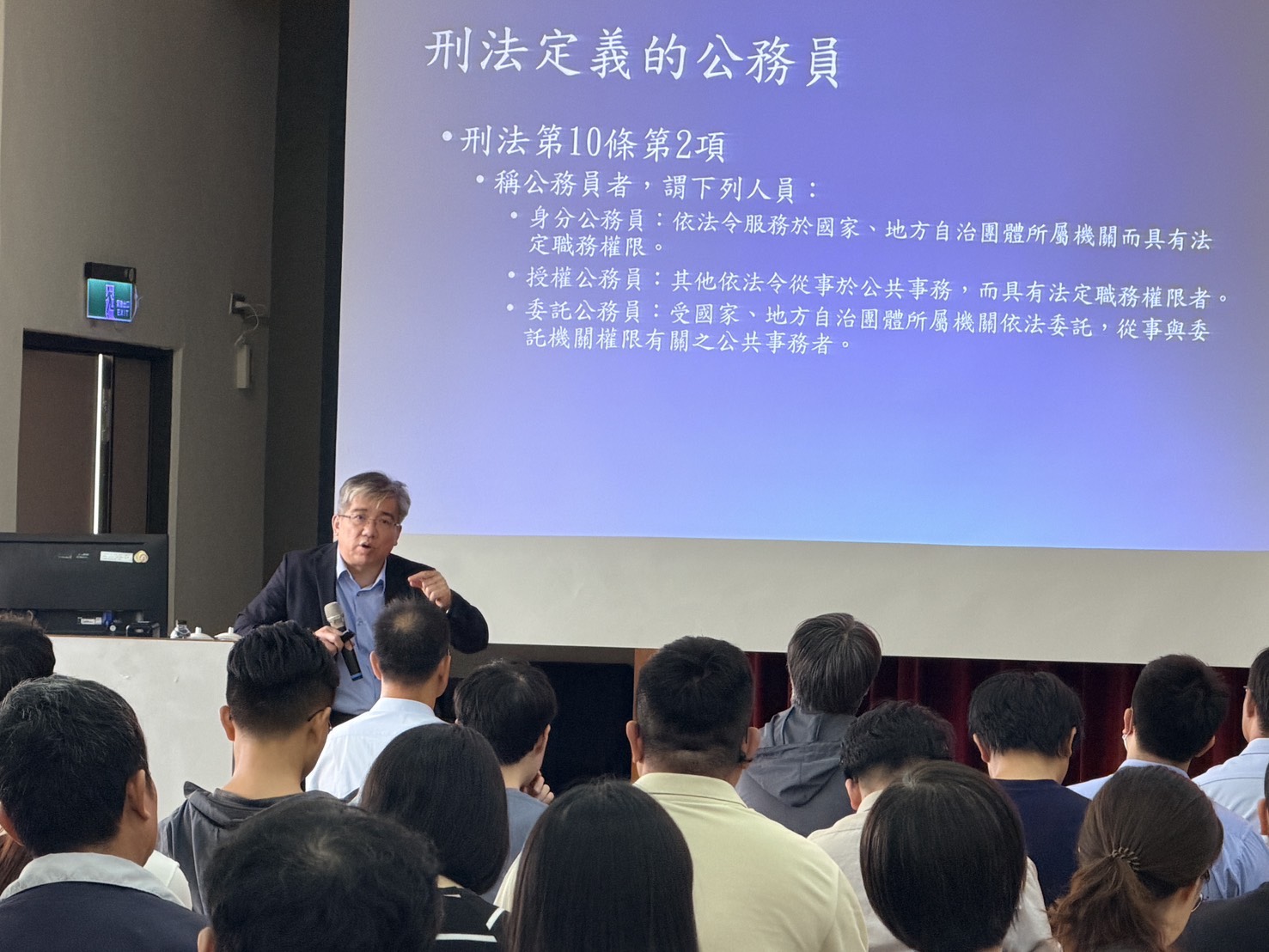
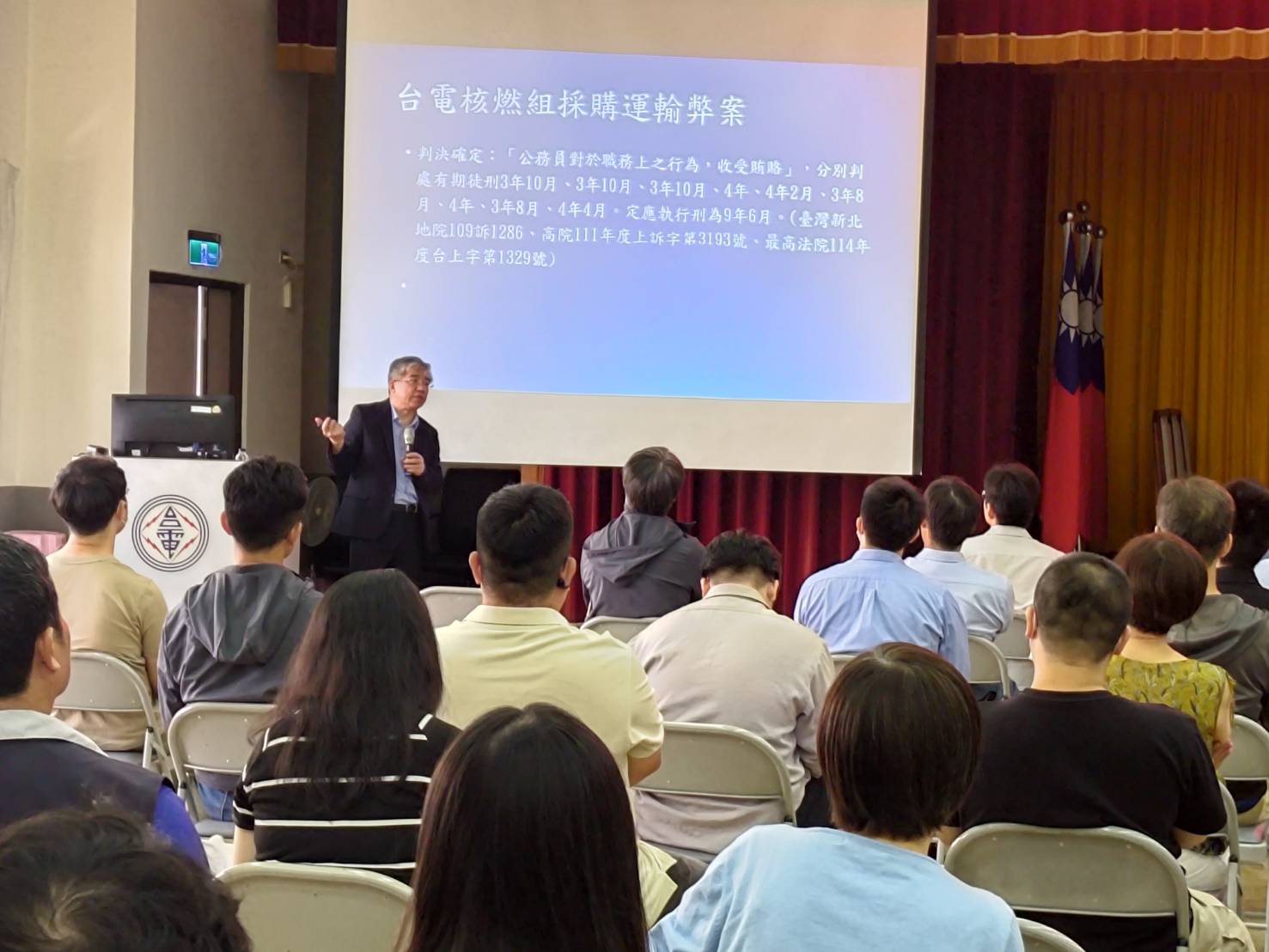
During the lecture, Chief Prosecutor Tsai pointed out that under the interpretation of the Supreme Court, if SOE employees handle or supervise "government procurement," they are classified as "authorized public servants" under the Criminal Code. Consequently, they are governed by the Anti-Corruption Act within the scope of procurement. The lecture provided an in-depth analysis of the offenses of "bribery" and "profiteering," citing multiple internal judicial judgments from Taipower as warnings. These cases included the Linkou Work Team procurement case involving fraudulent reviews and bribery, the First Nuclear Power Plant specialist who guided vendors in inflating estimates, and a nuclear fuel transport case where a section chief and a division chief received heavy sentences for long-term bribery. He further cited cases involving public hospitals, police officers using official vehicles for private purposes, and a guard handing cigarettes to an inmate, emphasizing that the law's definition of "illegal benefits" is extremely strict—even items of minimal value can lead to criminal liability.
Regarding workplace interactions, Chief Prosecutor Tsai explained the "Ethics Guidelines for Public Servants." He exhorted staff that when dealing with individuals or entities with a conflict of interest with their duties, receiving gifts or attending banquets and entertainment should, in principle, be refused, and any lobbying or solicitation must be properly logged. The only exceptions are occasional official courtesies where the value is under NT$3,000 (with an annual limit of NT$10,000 from the same source). In closing, he encouraged staff with the words "live a simple life, maintain absolute integrity" to establish a correct understanding of the rule of law and resist temptation to ensure a safe and secure career.
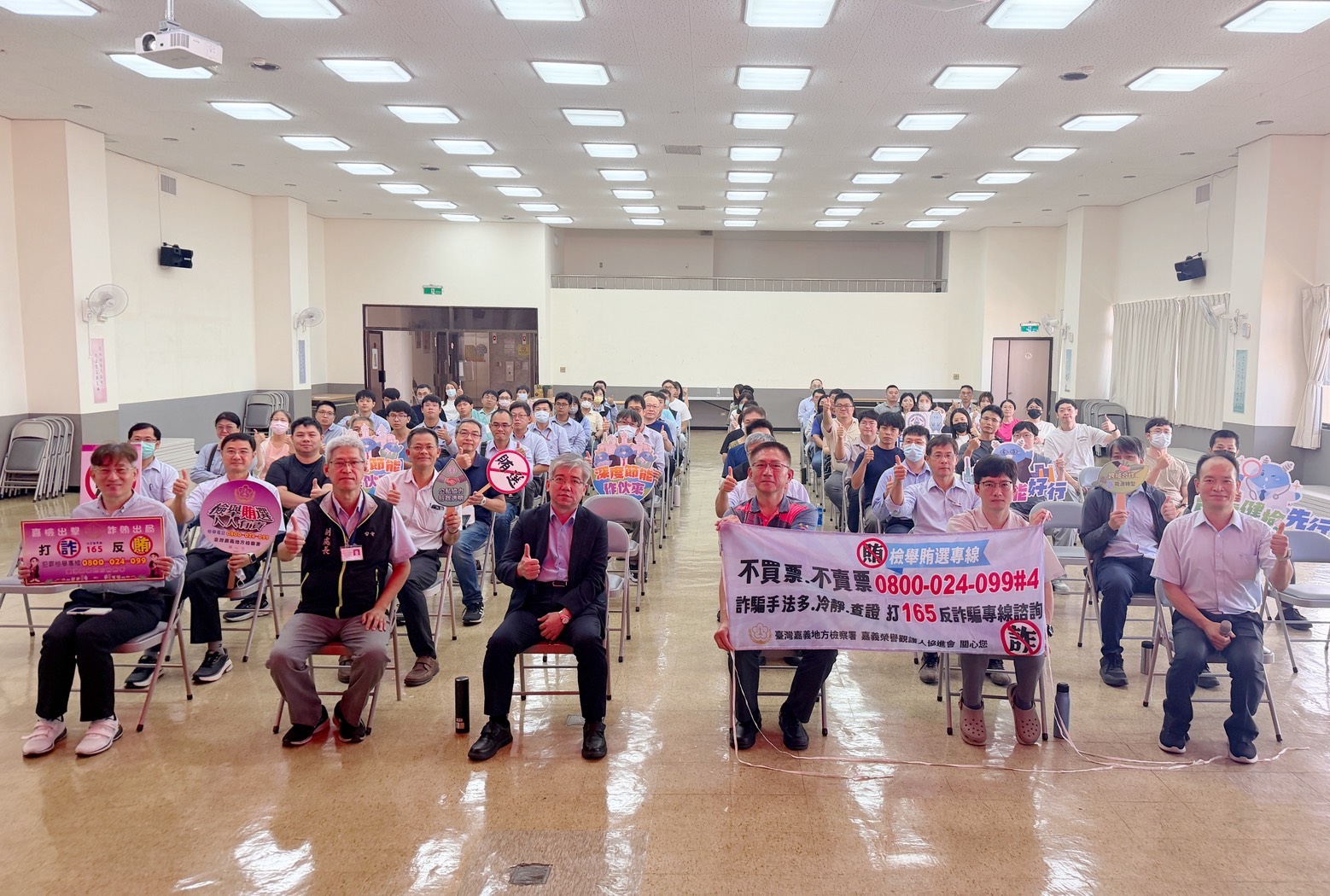
The Chiayi District Prosecutors Office calls on candidates not to defy the law, and urges the public to step forward to jointly safeguard a clean election culture and democratic achievements. If members of the public discover clues regarding suspected election interference, please call the toll-free report hotline: 0800-024099 (press 4 after connecting). Judicial organs will enforce the highest standards of confidentiality regarding the identity of informants and will issue substantial rewards: up to NT$20 million for foreign interference in elections, up to NT$10 million for bribery cases, and up to NT$5 million for illegal election gambling rings.
Pictures
S__27295772_0_0
S__27295766_0_0
10335_0
S__27295765_0_0