
Chiayi Prosecutors and Police Visit Houhu: Guarding Seniors with Compassion



- Publication Date:
- Last updated:2026-05-07
- View count:66
Leveraging Protective Tech to Build a Frontline Defense for Elders
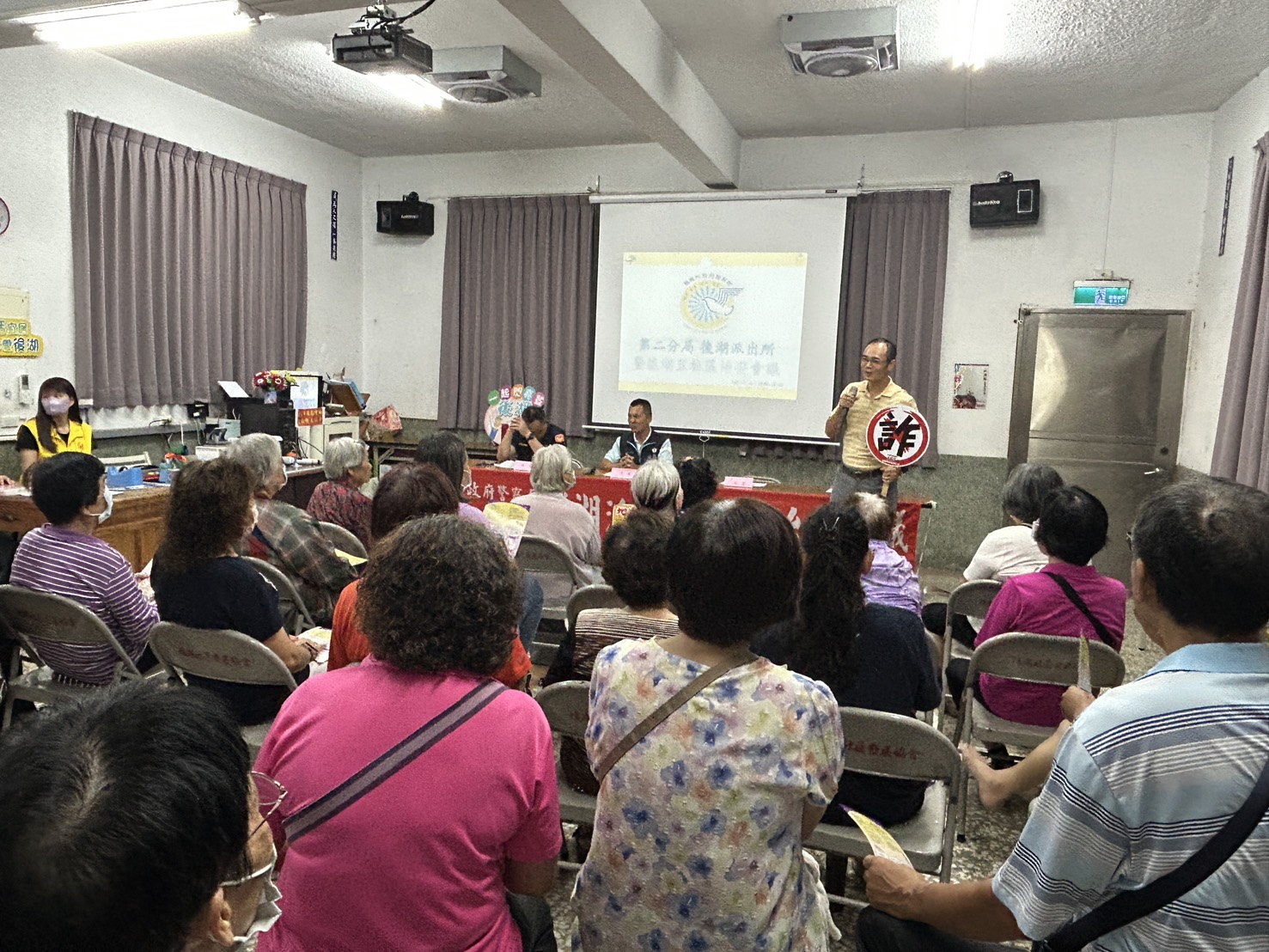
As fraud tactics and technological applications evolve daily, the elderly have increasingly become prime targets for scam syndicates. To safeguard seniors' retirement savings and peace of mind, the Chiayi District Prosecutors Office dispatched Probation Officer Lu Hao-quan yesterday evening (May 6). Joining forces with the Houhu Outpost of the Chiayi City Police Department’s Second Bureau, they held a unique "Compassionate Anti-Fraud Seminar" at the Houhu Community Development Association.
Breaking away from traditional, dogmatic lecturing, the event used real-world cases to emphasize "soft companionship." The goal is to use warm community and family support systems to bridge the emotional gaps that scammers often exploit.
Walking Beside Seniors, Not Choosing for Them
Probation Officer Lu shared that when facing potential scams, seniors fear more than just financial loss; they fear losing their financial autonomy and dignity. If children intervene too aggressively or make decisions for them, it can trigger resentment. This often allows scammers to swoop in using psychological tactics, playing the role of the "only one who truly understands" the elder.
Lu reminded attendees that the role of the community and family should be that of a "consultant" rather than a "judge." Through listening and dialogue, they should guide seniors to verify information themselves, addressing risks together while respecting their independence.
Reducing Financial Risk Without Stripping Autonomy
Regarding asset security, the focus of anti-fraud efforts is "risk management." The seminar introduced several systems designed to lower financial risk without requiring seniors to hand over their bankbooks or seals:
-
In-person care and verification at financial institutions.
-
Family-assisted daily transfer limits.
-
Applications for "Land Registration Change Notifications."
Weng Yu-da, Chief of the Houhu Outpost, stated that soft communication helps seniors understand that these safeguards exist to protect a lifetime of hard work, making them more willing to proactively consult the police or professionals.
Staying Vigilant Against AI Traps and Returning to Real Connection
With the rise of AI technology, the seminar issued a timely warning: While AI is a convenient tool, it must never be trusted blindly. Scammers can now use AI to spoof voices or faces to impersonate relatives.
The Probation Officer advised that if a major life issue or a sudden request for funds arises, one must "Stop, Look, and Listen." Return to face-to-face discussions with family or contact the police directly for verification. Do not grant trust based solely on a voice or an image on a screen.
Filling the Gaps with Companionship: A Warm Community Defense
Scam syndicates often exploit the loneliness and isolation in the lives of the elderly. Lu emphasized that the best "prescription" against fraud is companionship. When interaction and care between neighbors and family members become frequent, the panic manufactured by scammers loses its power.
Tsai Tzung-Shi, Chief Prosecutor of the Chiayi District Prosecutors Office, stated that by focusing on the emotional needs of seniors through "soft" outreach, elders can feel that the law and police services are more than just cold icons of public authority—they are a warm, helping hand ready to pull them back at a critical moment.
Pictures
S__12017670_0